Facebook

WELCOME TO OUR BLOG

We're sharing knowledgein the areas which fascinate us the most
click

Shipbuilding by Block (Modular Construction Method)

By Ruby May 19th, 2026 129 views
Shipbuilding by Block (Modular Construction Method)

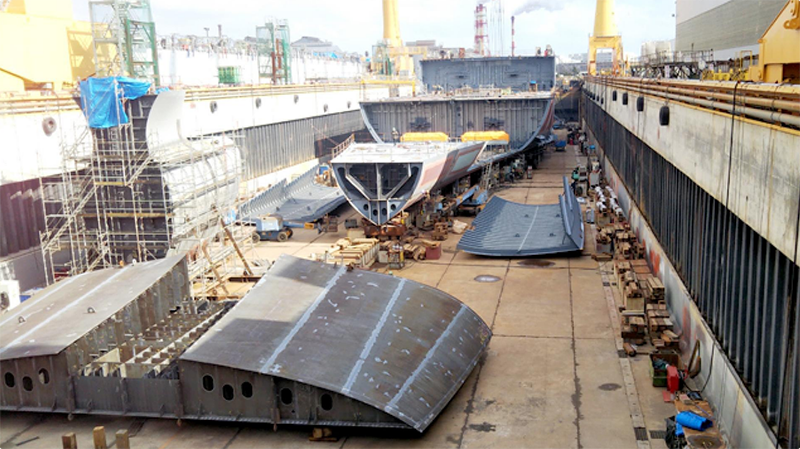
Shipbuilding by block, also known as modular ship construction, is a modern advanced shipbuilding fabrication method. The whole hull and superstructure are reasonably divided into multiple independent large-scale prefabricated structural blocks according to design rules. These blocks are manufactured and completed in dedicated workshops in advance, then transported and hoisted into dry docks or slipways for overall assembly, integration and forming.

Instead of adopting the traditional backward construction mode of building the ship plate-by-plate and section-by-section from the keel upward to the deck level, modern shipyards firstly complete the fabrication of large hull structural blocks in indoor workshops. During the block manufacturing period, partial pre-outfitting work including pipeline laying, cable installation and tray arrangement is finished synchronously. After structural construction and partial outfitting are completed, all blocks are joined and assembled together on site just like assembling giant building block Lego pieces.
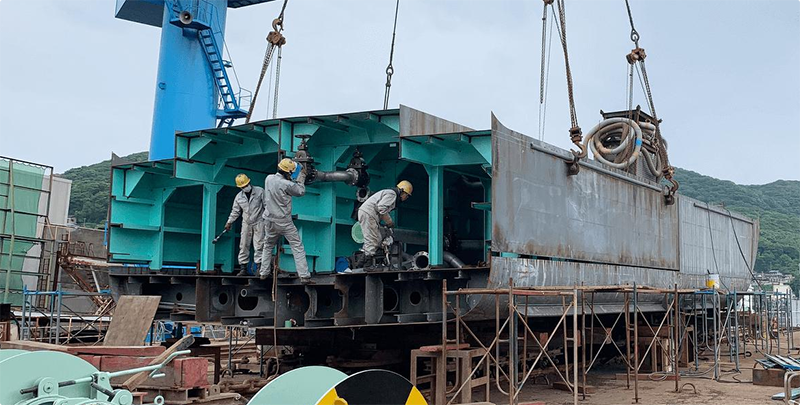
How Block Construction Works

1. Design & Planning

  • Professional 3D hull modeling and overall process simulation by adopting advanced CAD/CAM ship design systems.
  • According to hull structure type, tonnage and construction process, the entire vessel is split into several standard and manageable independent structural blocks, with clear division of boundaries, structural connection dimensions and outfitting scope.
  • Compile block construction drawings, process documents, lifting schemes and welding procedure specifications in advance.

2. Block Fabrication

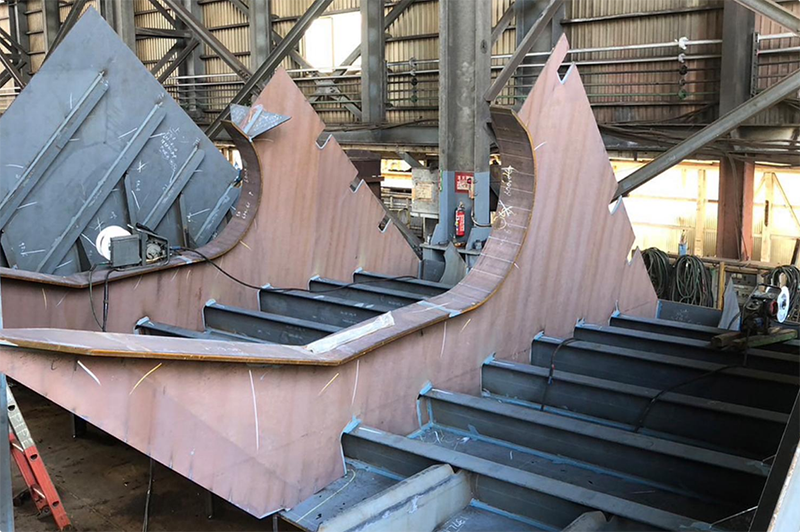
  • Raw steel plates are precisely cut and blanked by CNC plasma cutting machine or laser cutting machine to ensure dimensional accuracy.
  • Small steel panels are assembled and welded into sub-blocks and sub-assemblies in the workshop.
  • Carry out assembly and welding of main hull frames, longitudinal stiffeners, transverse bulkheads and longitudinal bulkheads to form complete large hull blocks.
  • Conduct dimensional inspection, correction of welding deformation and nondestructive testing of welding seams after block forming.

3. Pre-Outfitting

This is the core advantage of block construction, realizing outfitting ahead of schedule.
  • Pre-install ship service pipelines, process pipelines, cable trays and ventilation & air conditioning (HVAC) ducts inside and outside the block.
  • Weld and fix equipment foundation bases, deck mounting seats and pipeline supports in place in advance.
  • Complete internal surface rust removal, primer painting and partial finish painting of blocks in the indoor workshop.
  • Install partial auxiliary equipment, valve groups and local electrical pre-wiring.

4. Block Assembly & Berth Erection

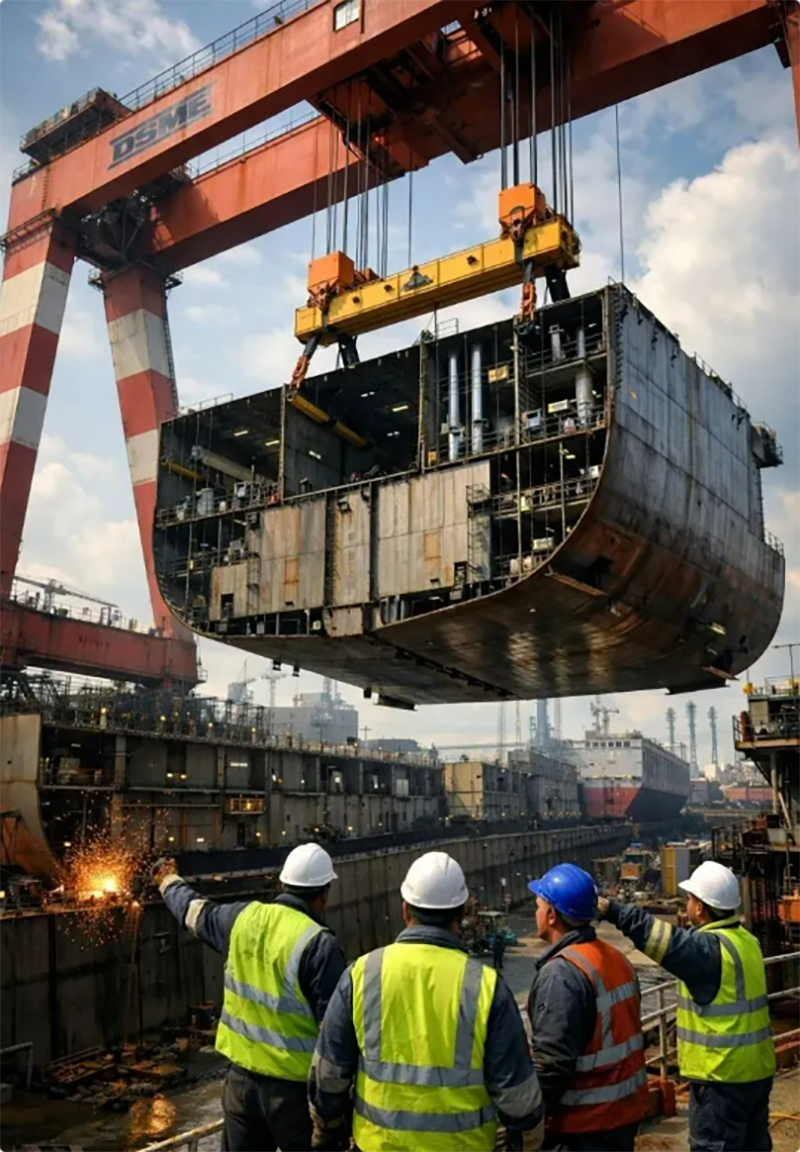
  • Use large gantry cranes and floating cranes to lift finished blocks one by one and transport them to the designated position of dry dock or slipway.
  • Carry out precise axis alignment, level adjustment and gap control between adjacent blocks.
  • Complete full penetration welding of block joint seams, and carry out flaw detection and stress relief treatment.
  • Conduct overall system integration, pipeline connection, cable through laying, and complete on-site debugging and function testing of hull, electrical and piping systems.  


Advantages of Block Construction

Realize parallel cross-operation of steel structure, outfitting and painting, greatly shortening overall ship construction cycle.

Most construction work is transferred to indoor workshops, free from the influence of bad weather such as wind, rain and high temperature.

Workshop centralized production greatly improves manufacturing precision and overall quality control level.

Standardized block production reduces repeated labor and construction waste, effectively lowering comprehensive labor and material costs.

Indoor fixed operation environment optimizes construction safety management and reduces high-altitude and open-air operation risks.

Stable production rhythm enables shipyards to arrange production plans reasonably and guarantee faster ship delivery schedules.
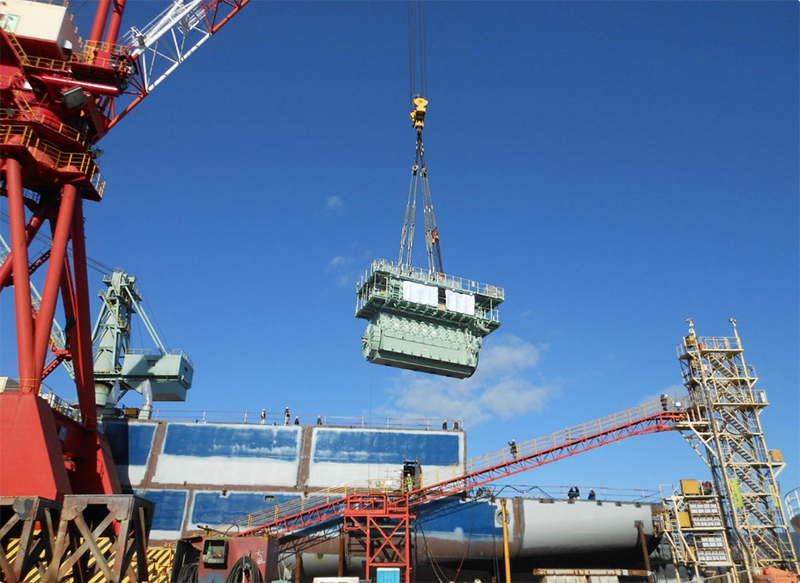

Application in Modern Shipyards

This modular block building method has become the mainstream production mode in global large shipbuilding countries and core shipyards.

Mainly applied and promoted in:

  • South Korea
  • Japan
  • China

World-renowned shipbuilding enterprises such as Hyundai Heavy Industries, Daewoo Shipbuilding & Marine Engineering, Samsung Heavy Industries, as well as domestic large shipbuilding groups, fully adopt modular block construction. It is widely used in the construction of LNG carriers, VLCC supertankers, container ships, bulk carriers, ro-ro ships and offshore engineering platforms.
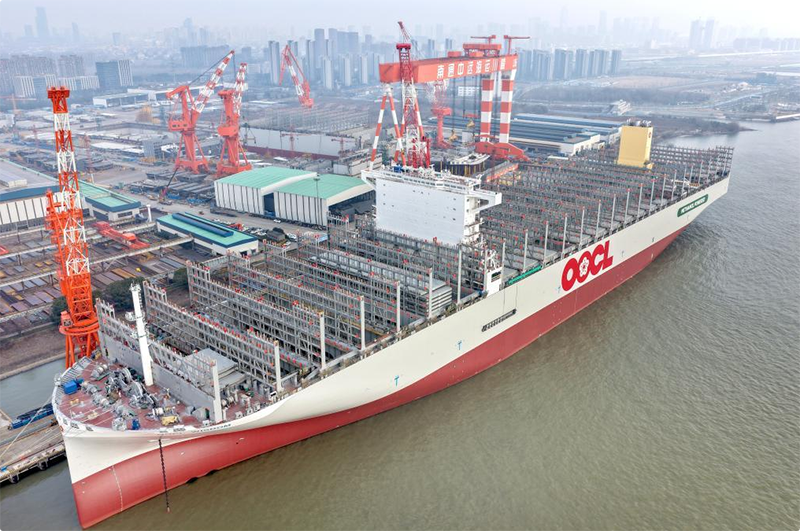

Why It Matters for Marine Engineers

For marine engineers, ship surveyors, hull QC and ship superintendents, mastering block construction technology is essential for daily work:

  • Master hull structural alignment accuracy and overall stress distribution control of the whole ship.
  • Scientifically control welding shrinkage, deformation and structural distortion during block fabrication and assembly.
  • Coordinate cross-working rhythm of hull, outfitting, electrical and painting disciplines.
  • Optimize workshop production scheduling, dock berth utilization and overall project production planning.
  • Carry out whole-process quality assurance, inspection standard formulation and defect rectification management. 


Shipbuilding by block and modular construction method has completely revolutionized the traditional shipbuilding industry production mode. It perfectly integrates structural engineering precision, lean project management and large-scale industrial production advantages. It not only standardizes shipbuilding processes and stabilizes product quality, but also greatly improves shipyard production efficiency and market competitiveness.

It enables modern shipyards to design and build various high-complexity large vessels with shorter construction period, more stable quality and more economical cost than ever before, and has become an irreplaceable core process in modern shipbuilding.

Marine Equipment Supply for Yacht Project
Previous
Marine Equipment Supply for Yacht Project
Read More
Lesser Fullness, Greater Growth — Workplace Wisdom from the Chinese Solar Term “Xiaoman”
Next
Lesser Fullness, Greater Growth — Workplace Wisdom from the Chinese Solar Term “Xiaoman”
Read More

ARE YOU READY TO WORK WITH US?

Contact US